

Quick answer: If you’re a solo or small-group therapist in the US billing insurance, SimplePractice is usually the better fit — it’s built specifically for mental health with billing built in, not bolted on. If you run a multidisciplinary clinic, practice in Canada, or want deeper customization, Jane is worth a serious look. This SimplePractice vs Jane (or Jane vs SimplePractice) comparison breaks down pricing, insurance billing, telehealth, and support so you can decide with confidence.
Choosing an EHR is one of the more consequential technology decisions you’ll make for your private practice — and it’s one that most therapists end up making without nearly enough information.
SimplePractice and Jane are two of the most widely used platforms among mental health professionals. Both handle the core functions: scheduling, documentation, telehealth, client communication, and billing. Both are polished, well-supported products that therapists use successfully every day.
So why does the choice matter? Because the workflow differences are real, and choosing a platform that doesn’t fit how you work creates friction that adds up over time. The billing interface, the client portal experience, the way notes connect to claims — these things affect your day more than the feature list suggests.
I’ll be upfront: most of my billing clients use SimplePractice, so that’s the platform I have the most hands-on experience with. That perspective shapes what I notice and what I’d flag. I’ll try to be fair to Jane where it genuinely has an edge, but if SimplePractice is the recommendation I come back to more often for solo US-based therapists who bill insurance, that’s because it’s the platform I’ve seen work well in that context most consistently.
Features, pricing, integrations, and functionality change over time. Always review the latest information directly from each company before making your decision.
Quick Comparison
| Feature | SimplePractice | Jane |
| Starting price (solo) | $29/mo (Starter); most insurance billers need Essential at $69/mo | ~$54/mo base; insurance billing requires Practice plan ~$79/mo + add-ons |
| Free trial | 30-day free trial on all plans | No free trial |
| Built for mental health | Yes — exclusively | Multi-discipline (PT, chiro, massage, therapy) |
| Insurance billing | Built in on Essential+; $0.25/claim clearinghouse fee | Requires add-on and third-party clearinghouse (e.g. Claim.MD) |
| Telehealth | Built in on Essential+; widely praised for reliability | Built in; strong for group sessions and multi-discipline |
| Client portal | Polished; intake, scheduling, payments, messaging in one place | Functional; strong for in-person clinic workflows |
| Psychology Today integration | Yes — direct integration | No |
| AI note-taking/scribe | AI Note Taker add-on ($35/mo) | AI Scribe built in on some plans |
| Customization | Streamlined; less configurable but easier out of the box | Highly customizable; steeper learning curve |
| Best for | Solo/small US therapy practices billing insurance | Multi-discipline clinics, Canadian practices, customization-focused workflows |
| Get started | Start Free 30-Day Trial → | Watch the Demo → |
| Support | Live chat and email support; phone support included on higher-tier plans; extensive help center | Email and live chat support; phone support availability varies by plan and region |
Pricing verified mid-2026 from published sources. Verify current rates directly with each platform before signing up.
What Each Platform Is Designed For
This is the distinction that matters most and gets glossed over in most comparisons: SimplePractice and Jane are not the same kind of product targeting the same market.
SimplePractice Is Built Exclusively for Mental Health

SimplePractice was built for therapists, counselors, psychologists, and other behavioral health providers. Every feature — from the intake forms to the note templates to the billing workflows — is designed around the therapy session lifecycle. It doesn’t try to serve chiropractors or physical therapists. That focus is a genuine advantage for mental health practices because nothing feels generic or repurposed.
For US-based therapists who bill insurance, that specificity translates directly into a billing workflow that makes sense from day one. The CPT codes, the documentation requirements, the claim submission process — it’s all calibrated for behavioral health.
Jane Is a Multi-Discipline Platform

Jane was built in Canada and serves a much broader range of healthcare disciplines: physiotherapists, chiropractors, massage therapists, naturopaths, and mental health professionals. That breadth gives it significant advantages in certain settings — particularly multidisciplinary clinics and Canadian practices billing provincial health plans — but it also means the platform isn’t optimized specifically for a US therapy practice the way SimplePractice is.
Jane is a genuinely excellent platform. The interface is clean, the customization is deep, and the charting tools are flexible. But if you’re a solo therapist in the US primarily billing commercial insurance, you’re using a multi-discipline platform designed for a broader audience than you.
Insurance Billing: Where the Real Difference Shows
This is the section that matters most if you’re billing insurance, which is most of the therapists reading this.
SimplePractice

Insurance billing in SimplePractice is genuinely integrated — not bolted on. You can submit claims, track payment status, post ERAs, manage your aging AR, and run insurance reports all from the same dashboard where you do everything else. The workflow is logical and relatively easy to learn even if you’re new to billing.
In my billing work with multiple therapy practices, SimplePractice is the platform I encounter most often, and the billing side of it holds up in real-world use. Claims submit cleanly, the ERA posting works, and the AR reporting is useful for staying on top of what’s outstanding. It’s not perfect — no billing platform is — but it’s solid and well-suited to the volume a solo or small group practice generates.
One feature worth calling out: SimplePractice integrates directly with Psychology Today, the largest therapist directory. New client inquiries from your listing flow directly into SimplePractice for scheduling and intake. For a practice that relies on Psychology Today for referrals, that integration saves real time.
Jane
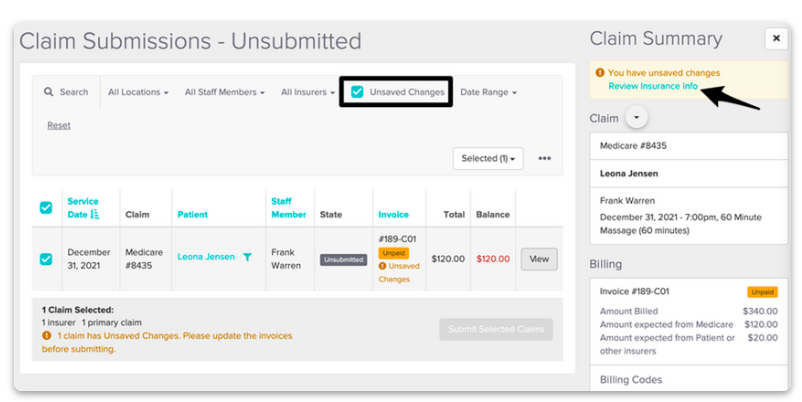
Jane supports insurance billing, but it requires a third-party clearinghouse (most commonly Claim.MD) to handle electronic claims submission. That’s an additional subscription, an additional setup step, and one more integration point that can create friction if something goes wrong with a claim.
The billing workflow in Jane is functional and some therapists prefer it, but it’s not as seamlessly integrated as SimplePractice’s. If billing is a significant part of your practice and you want the simplest possible setup, the extra layer adds complexity that SimplePractice avoids.
Telehealth
Both platforms include built-in telehealth, and both are HIPAA-compliant. For most standard individual therapy sessions, either works well.
SimplePractice’s telehealth is widely considered more reliable and better integrated with the rest of the platform. The client joins directly from the portal — no separate app download, no third-party link — and the scheduling, reminders, and session all flow together. For therapists who do a significant percentage of their work virtually, that seamlessness matters.
Jane’s telehealth has gotten notably better and now supports group sessions with screen sharing and waiting rooms. It’s a stronger option for multidisciplinary clinics that run group programming or need telehealth for non-therapy disciplines. For a solo therapist doing primarily individual sessions, it works fine but doesn’t have a clear edge over SimplePractice.
Client Experience and Portal
Your EHR affects your clients’ experience of your practice, not just your own workflow. The intake process, the scheduling interface, the way they join telehealth sessions — clients notice when it’s smooth and they notice when it isn’t.
SimplePractice’s client portal is one of its genuine strengths. Custom intake forms, consent documents, appointment scheduling, telehealth access, secure messaging, and payment all live in one place and work together cleanly. Clients frequently cite the portal quality as a reason they felt comfortable with a practice from the first interaction.
Jane’s client portal (called My Account) is solid and handles scheduling, intake forms, payments, and record access well. It’s particularly strong for in-person clinic workflows with multiple providers and rooms. For a solo telehealth-heavy practice, SimplePractice’s portal tends to feel more cohesive.
Documentation and Notes
Both platforms support clinical documentation including progress notes, treatment plans, intake forms, and electronic signatures. The differences are in flexibility and how notes connect to billing.
SimplePractice
SimplePractice’s note templates are purpose-built for mental health, which means they map naturally to therapy session documentation without needing much customization out of the box. The notes connect directly to the billing workflow, so moving from a completed session note to a submitted claim is a short, logical path.
The trade-off is that SimplePractice is less customizable than Jane for practices that want to build highly specific workflows or templates. For most solo therapists, the built-in templates are more than sufficient.
Jane
Jane’s charting system is more flexible and customizable than SimplePractice’s. It supports SOAP notes natively and allows practitioners to build templates tailored to specific disciplines — which is useful in a multidisciplinary setting but less critical for a solo mental health practice. Jane also includes an AI Scribe feature that converts voice recordings into structured notes, which is built into certain plans rather than offered as a paid add-on.
Ease of Learning and Setup
For solo practice owners managing their own administrative work, getting up to speed quickly matters. You don’t have a dedicated admin staff to absorb the setup time.
SimplePractice is generally easier to get running out of the box. The interface is clean, the onboarding is guided, and because it’s designed for a specific use case (solo or small group mental health practice), there are fewer decisions to make during setup. Most therapists can have a functioning workflow within a few days of starting their trial.
Jane offers more flexibility, but that flexibility comes with a steeper initial learning curve. Practices with dedicated administrative support tend to adapt to Jane faster than solo operators setting everything up themselves. If you enjoy configuring software and want a highly customized system, Jane rewards that effort. If you want to set it up, get it working, and move on, SimplePractice has the edge.

Who Should Choose SimplePractice
SimplePractice is the stronger choice for most solo therapists in the US who bill insurance. Specifically, it tends to be a good fit if you:
- Run a solo or small group private practice in the US
- Bill commercial insurance and want an integrated, built-in billing workflow
- Do a significant portion of your sessions via telehealth
- Use Psychology Today and want new client inquiries flowing directly into your scheduling
- Want to get up and running quickly without extensive configuration
- Want to take advantage of a 30-day free trial before committing
If that sounds like your practice, the easiest next step is testing it yourself — SimplePractice’s 30-day trial is long enough to actually run the billing workflow, not just click through the calendar. → Start your free SimplePractice trial
Who Should Choose Jane
Jane makes more sense in specific contexts where its strengths are directly relevant:
- You operate a multidisciplinary clinic that includes non-therapy disciplines (PT, chiro, massage, etc.)
- You’re based in Canada and need provincial health billing support
- You want highly customizable charting templates and workflows
- Your practice is primarily in-person with complex scheduling across multiple providers and rooms
- You want an AI Scribe included in the platform rather than as a paid add-on
If Jane sounds like the better fit for your practice, the demo is the best way to see the customization and charting flexibility in action before you commit. → Watch Jane’s demo
A Note on Switching EHRs
Whichever platform you choose, it’s worth thinking through the data portability question before you commit. If you decide to switch later — and many practices do, as their needs evolve — how easily can you get your data out?
Both SimplePractice and Jane allow data export, but the format and completeness of exports vary. Clinical notes and billing history may not transfer perfectly into a new system. Before signing up for either platform, ask specifically about data export formats and what a migration would look like. It’s easier to make that decision with full information now than to discover limitations when you’re ready to move.
If neither platform feels like quite the right fit, you’re not limited to these two. Platforms like Carepatron take a different approach with a free entry tier — see our Carepatron vs. SimplePractice comparison if cost is the deciding factor. And if Jane’s multi-discipline design is the sticking point, our Jane App Alternatives guide covers six purpose-built options with current pricing.
Frequently Asked Questions
Which is better for insurance billing — SimplePractice or Jane?
For most solo US therapists billing commercial insurance, SimplePractice has a more seamlessly integrated billing workflow. Insurance claims, ERA posting, and AR management are built into the platform rather than requiring a third-party clearinghouse add-on. Jane supports insurance billing but typically requires a separate clearinghouse subscription (like Claim.MD), which adds a setup step and an ongoing cost. If billing is a significant part of your practice, SimplePractice’s integrated approach is simpler and usually slightly less expensive once all-in costs are considered.
Does SimplePractice cost more than Jane?
Not necessarily, once you account for the full cost of each. SimplePractice’s Essential plan for insurance-billing therapists runs $69/month plus $0.25 per claim. Jane’s Practice plan runs approximately $79/month, and you’ll typically add a clearinghouse subscription on top of that. For a solo practice submitting moderate claim volume, SimplePractice tends to come out equal to or slightly less expensive than Jane for an equivalent feature set. Always verify current pricing directly with each platform, as plans change.
Can I try SimplePractice before committing?
Yes. SimplePractice offers a 30-day free trial on all plans, which is one of the more generous trials available and gives you enough time to actually test the billing and documentation workflows. Jane does not currently offer a free trial. That difference alone is worth factoring in if you’re still deciding between the two.
Is Jane less capable than SimplePractice?
No — Jane is a mature, capable platform. The more accurate framing is that they’re designed for different use cases. Jane excels for multidisciplinary clinics, Canadian practices, and workflows that benefit from deep customization. SimplePractice excels for US-based mental health practices billing commercial insurance. Calling one “better” than the other without context misses the point.
Which platform is easier to learn?
Most therapists find SimplePractice easier to get up and running, particularly if they’re solo operators managing their own setup without dedicated admin support. It’s designed for a specific workflow and doesn’t require much configuration to get that workflow functioning. Jane has more flexibility but a steeper initial learning curve. If you want to configure a highly customized system, Jane rewards the effort. If you want to get it working and move on, SimplePractice has the advantage.
Can I switch EHRs later if I change my mind?
Yes, though it takes planning. Both platforms allow data export, but the format and completeness of exports vary. Clinical notes and billing history may not import cleanly into a new system. If you think you might switch down the road, ask each platform directly about their data export options before you sign up. It’s a much easier conversation to have before you have three years of records in the system.
Which EHR do most therapists use?
SimplePractice is the most widely used EHR among US-based mental health private practice therapists. In my billing work, it’s the platform I encounter by a significant margin. That said, “most commonly used” doesn’t mean universally best — the right platform depends on your practice type, location, and billing model.
Does Jane work for US therapists?
Yes. Jane supports US insurance billing and is used by US-based therapists. Its roots are in the Canadian market and its design is oriented toward multidisciplinary clinics, but it’s a viable option for US mental health practices, particularly those that want more workflow customization than SimplePractice offers. The main practical consideration for US insurance billers is the additional cost and setup of a third-party clearinghouse.
Is Jane a good EHR for therapists?
Yes, with a caveat. Jane works well for therapists, especially those in multidisciplinary clinics or Canadian practices — but it wasn’t built exclusively for mental health the way SimplePractice was. US-based therapists billing insurance tend to find the experience less streamlined, since Jane requires a third-party clearinghouse for claims. For a therapist-specific platform, SimplePractice is usually the closer fit.
What are the best Jane app alternatives?
SimplePractice is the most direct alternative for US-based mental health providers, particularly those billing insurance. Other options worth considering include TherapyNotes (strong billing and support) and Sessions Health (budget-friendly). For a full breakdown of six alternatives with 2026 pricing, see our Jane App Alternatives guide.
Final Thoughts
SimplePractice and Jane are both capable platforms that work well for the practices they’re designed for. If I’m recommending one for a solo US therapist who bills commercial insurance, wants integrated billing, and values getting up and running quickly — it’s SimplePractice. That’s not a knock on Jane. It’s a reflection of what I’ve seen work consistently in real practices doing that specific type of work.
If you’re running a multidisciplinary clinic, practicing in Canada, or you genuinely want a highly configurable system you can build out on your own terms, Jane is worth a serious look.
The best decision either way is an informed one. Take SimplePractice’s 30-day trial, watch Jane’s demo, and test the billing workflow specifically — not just the scheduling calendar. That’s where the real difference shows up in day-to-day practice.
